Address
Caochang Industrial Area, Liguang Rd, Lishui, Nanhai, Foshan, Guangdong, China
Phone:
0086-20-8938 9313
0086-757-8938 9313
Email:
Work Hours
Monday to Friday: 8AM - 10PM
24x7 online service

Address
Caochang Industrial Area, Liguang Rd, Lishui, Nanhai, Foshan, Guangdong, China
Phone:
0086-20-8938 9313
0086-757-8938 9313
Email:
Work Hours
Monday to Friday: 8AM - 10PM
24x7 online service
Custom LED Light Box & SEG Display Manufacturer
 Byadminn
An LED walking billboard can be a practical tool for a store opening or event activation, but buyers sometimes receive quotations for completely different products under the same name. An illuminated printed backpack is not an LCD video backpack. Before purchasing for a marketing agency, rental fleet or overseas distributor, identify the graphic system, battery specification and carrying conditions.
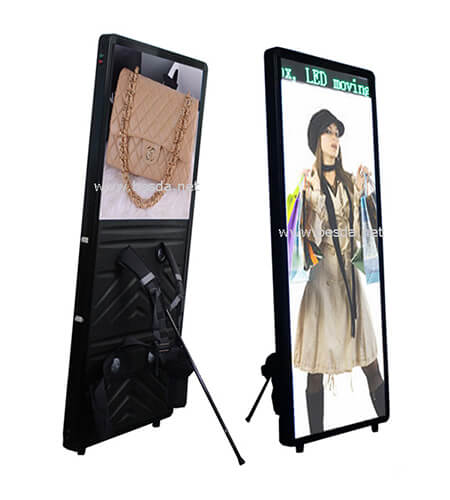
A printed LED walking billboard uses internal LEDs to illuminate a replaceable physical graphic. Some configurations also have a separate programmable message bar. A digital video backpack uses a screen and software. Asking the supplier to identify which category is offered is the first protection against a mismatched quotation.
A three-hour indoor exhibition walk, an all-day street promotion and a crowded evening event impose different weight, runtime and safety requirements. Specify where the promoters will move, how often they will rest and whether outdoor rain exposure is possible.
Ask for a drawing showing the frame, illuminated graphic, back support, shoulder straps, battery compartment, power switch, charging connector and any optional text module. This makes it possible to identify which component can be repaired or replaced.
Weight should identify what is included: frame, lighting, battery, straps, both graphics and optional message unit. A legacy BrandMate product reference mentions approximately 7 kg for a configuration, but current model weight must be reconfirmed. It is not an industry-wide standard or a claim for every version.
A large luminous surface can feel unstable if it sits far behind the wearer’s back. Review strap width, padding, center of gravity, adjustment range, waist/chest retention where available and how the unit is removed during breaks. Ask actual wearers to test a sample where possible.
Distinguish front and rear graphic sizes from the outside of the assembled frame. Request templates with visible area, covered margin, finishing method and a poster-replacement instruction. A future graphic replacement should not require guessing which panel belongs to which model.
Some legacy BrandMate images show a top scrolling text module. Confirm availability and whether text editing requires a device, control panel or another method for that exact option. Never attribute video playback, live social feeds or cloud scheduling to an illuminated printed poster.
Battery labels may state mAh, but runtime also depends on battery voltage, usable energy, LED power and accessories. Compare the battery Watt-hour rating and actual load under the selected brightness setting. Request a timed test for the exact assembled configuration.
Ask for product model, battery identification, LED brightness/mode, start and stop criteria, test environment and observed operating hours. A marketing phrase such as “7–8 hours” should remain a historical reference unless a relevant current test supports it.
Record charger specification, full charge time, required outlet, storage procedure and the number of units per charging station. When several promoters rotate through shifts, a practical charging schedule can be more useful than purchasing the heaviest battery possible.
International air transport of lithium batteries is regulated. Ask for battery chemistry, Watt-hours, whether installed in equipment or packed separately, UN 38.3 test-summary availability, packaging arrangement and destination/carrier acceptance. Do not assume that a normal express parcel quotation includes battery-related handling.
IATA’s 2026 guidance covers lithium batteries in equipment as well as separate batteries, and requirements depend on the shipment. Shippers and freight partners should determine the applicable packing instruction, state-of-charge restrictions, marking and documents for the actual shipment; website copy cannot replace that classification.
A weather-resistant plug is not evidence that the complete backpack can operate in heavy rain. Review LED compartment sealing, battery housing, connectors and any declared protection rating. For outdoor activations, document operational restrictions and a stop-use plan for unsafe weather.
Large wearable displays can obstruct peripheral awareness or distract in crowded areas. Event managers should check local permits, traffic rules, pedestrian constraints and wearer’s visibility. Avoid sharp corners, loose cables and unsupported claims that the device is safe in every public environment.
Use short headlines and high-contrast design suitable for a moving viewer. Test the printed message at realistic walking distance and lighting conditions. An illuminated display can still fail when type is too small or the key message is buried in promotional text.
Examples include store launches, trade-show circulation, pop-up sampling, festival sponsorship and retail foot-traffic campaigns where permitted. Match the number of promoters and campaign duration to practical operating time and comfort rather than promising any particular sales uplift.
Check poster access, frame edges, carrying hardware, power switches, cable strain relief, charger operation, representative runtime, accessory counts and packaging. If an optional scrolling bar is ordered, test the message function and include instructions.
Protect the illuminated face and corners, isolate hard accessories from graphic surfaces, label batteries correctly and include each unit’s components in a packing list. Clarify whether the shipper or freight forwarder prepares the necessary dangerous-goods documents.
Agencies buying multiple units should track individual unit numbers, battery condition, charger compatibility, print template revision and damage records. One standardized spare kit and an event check-in process can prevent last-minute failures.
| Required field | Buyer information |
|---|---|
| Model | Printed LED billboard / optional text bar / digital screen if actually required |
| Quantity | Units and accessories per unit |
| Graphics | Front/rear sizes, art files, replacement print quantity |
| Wearability | Actual loaded weight and fit requirements |
| Battery | Chemistry, Wh, runtime test, chargers |
| Usage | Indoor/outdoor, hours, operating conditions |
| Delivery | Country, carrier, required ship date, battery paperwork |
Can the graphic play video? Not on a printed illuminated poster. A separate digital-screen product would be required.
Does the listed mAh guarantee eight hours? No. Ask for the complete electrical configuration and measured runtime.
Can we ship with installed lithium batteries? Potentially, subject to the actual battery classification and transport rules; confirm with a qualified freight partner.
Is every model waterproof? No universal rating should be assumed. Request the rated use conditions and model-specific evidence.
Send BrandMate Display the quantity, proposed campaign, location, graphic sides, optional message bar, operating hours, destination and delivery deadline. Ask for a model drawing, wearability details, test-supported battery information and shipment documentation before placing a bulk order. See the LED Walking Billboard product page.
Technical reference: IATA guidance on shipping lithium batteries and IATA Battery Shipping Regulations. Transport requirements must be checked for each actual shipment and destination.