Address
Caochang Industrial Area, Liguang Rd, Lishui, Nanhai, Foshan, Guangdong, China
Phone:
0086-20-8938 9313
0086-757-8938 9313
Email:
Work Hours
Monday to Friday: 8AM - 10PM
24x7 online service

Address
Caochang Industrial Area, Liguang Rd, Lishui, Nanhai, Foshan, Guangdong, China
Phone:
0086-20-8938 9313
0086-757-8938 9313
Email:
Work Hours
Monday to Friday: 8AM - 10PM
24x7 online service
Custom LED Light Box & SEG Display Manufacturer
Custom exhibition display systems for brands, contractors and distributors who need coordinated booth structures, graphics, counters and portable display components.
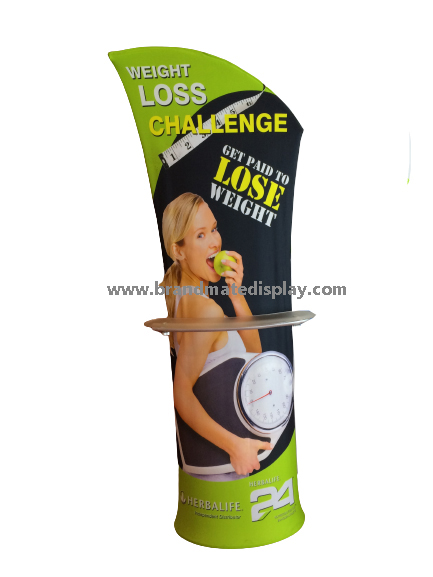
An exhibition display is the complete visual system used to define a booth or event area. Depending on the project it can combine backwalls, tension graphics, counters, vertical elements, illuminated modules and accessories.
| Buyer decision | What to confirm |
|---|---|
| Booth plan | Footprint, open sides, height and traffic flow |
| Display modules | Backwall, counter, vertical tower, light box, sidewall or hanging component |
| Venue rules | Height, fire, electrical and labor restrictions |
| Graphics | Artwork templates, revision control and replacement sets |
| Logistics | Case count, packed dimensions, destination and event deadline |
Start with a booth layout, not a catalog SKU. The display modules should be selected around entrances, product zones, meeting areas, storage and power access so the finished booth works operationally as well as visually.
Keep one brand standard across the booth: color profile, logo scale, image resolution and approved artwork revisions. For multi-module systems, label graphics by position to reduce installation errors.
Large exhibition systems may combine tool-free and tool-assisted components. Buyers should know the installation sequence, crew assumption, venue labor rules and whether any module requires electrical connection.
A multi-component booth needs a packing list that maps cases/cartons to modules. Store or event labels, spare connectors and separate graphic protection make repeat installations easier.
Do not order multi-module exhibition display from a front elevation alone. Provide overall booth footprint, open sides and zoning, traffic clearance, maximum height and the parts that project beyond the printed graphic. Compare these dimensions with the actual booth plan.
The complete structure includes the frame, support, connectors and graphics. For a exhibition display project, define the module connection sequence and cable routes, accessory quantities and whether components are interchangeable across units. Keep a version-controlled component list.
Confirm who views the installation from each direction. A single-sided layout may use a different graphic attachment or back finish from a double-sided layout. If both sides carry artwork, issue a face-labelled print schedule.
Agree the numbered graphics by module, finished visible area, seam and safe margins before printing. Store the approved artwork revision with its exact hardware model so the next campaign does not receive a mismatched replacement print.
Ask for a model-specific illustrated instruction starting with inventory, followed by module connection sequence and cable routes, graphic installation and a final stability/appearance check. Setup time should only be quoted when the crew size and tools are stated.
Review venue rules for wall heights, electrical connections and labor. “Tool-free” may apply to frame assembly but not necessarily to all hardware, lighting or venue work. Confirm local venue rules, rigging/electrical restrictions and safe access before sending staff to the event.
Identify corner joints, connector sets and counter modules. Keep a spare-part list, quantities and packaging labels, especially for recurring events. A replacement graphic or connector should reference the actual frame revision rather than a generic product name.
Inspect frame dimensions, joins and module connection sequence and cable routes, graphic fit, surface condition, all accessories, packed count and the available installation instructions. If electrical accessories are specified, perform power-on checks separately from mechanical assembly.
Choose protective case/carton matrix by booth module. Request packed length, width, height, gross weight, case count and freight handling constraints. Never infer shipping cost from the installed size or assume a carrying bag is suitable for repeated courier handling.
For multi-event exhibition installations, label every unit and printed graphic, preserve the folding/assembly instructions, dry and clean components according to their materials, and inspect connectors after each teardown. Maintain a replacement/repair record rather than repeatedly buying an entire kit.
| RFQ Field | Specify |
|---|---|
| Display format | Exhibition Display and project drawing |
| Size and configuration | overall booth footprint, open sides and zoning |
| Graphics | numbered graphics by module |
| Assembly | module connection sequence and cable routes |
| Accessories / spares | corner joints, connector sets and counter modules |
| Event | venue rules for wall heights, electrical connections and labor |
| Logistics | case/carton matrix by booth module |
| Commercial | Quantity, destination, artwork, deadline and repeat-use requirement |
The value of an exhibition supplier is coordination. We focus on turning the buyer’s booth brief into a defined module list, graphic plan, packing structure and installation basis before production.
Yes. Backwalls, counters, vertical stands and other modules can be quoted separately or as a coordinated set.
Yes, when the frame remains suitable and graphics or damaged parts can be replaced.
Booth dimensions, event date, desired modules, artwork status, destination, power requirement and packing preference.
Related: Tradeshow Display Manufacturer · Quality Control · Warehouse & Logistics
Compare the formats that buyers usually shortlist for the same project.
Send the display type, visible size, quantity and destination. We will reply within 2 hours. If your project is confidential, tell us at first contact and we will keep it under NDA.