Address
Caochang Industrial Area, Liguang Rd, Lishui, Nanhai, Foshan, Guangdong, China
Phone:
0086-20-8938 9313
0086-757-8938 9313
Email:
Work Hours
Monday to Friday: 8AM - 10PM
24x7 online service

Address
Caochang Industrial Area, Liguang Rd, Lishui, Nanhai, Foshan, Guangdong, China
Phone:
0086-20-8938 9313
0086-757-8938 9313
Email:
Work Hours
Monday to Friday: 8AM - 10PM
24x7 online service
Custom LED Light Box & SEG Display Manufacturer
Choose tabletop or floor-standing sign holders by reading height, stability and how often the printed message must change.
A tabletop holder can put a short message beside a product or service point; a floor-standing holder can present information before a customer reaches the counter. For retail and hospitality buyers, the useful choice is the format that makes the intended message readable while fitting the real work area and staff changeover routine. Approve the location, insert and complete support together.
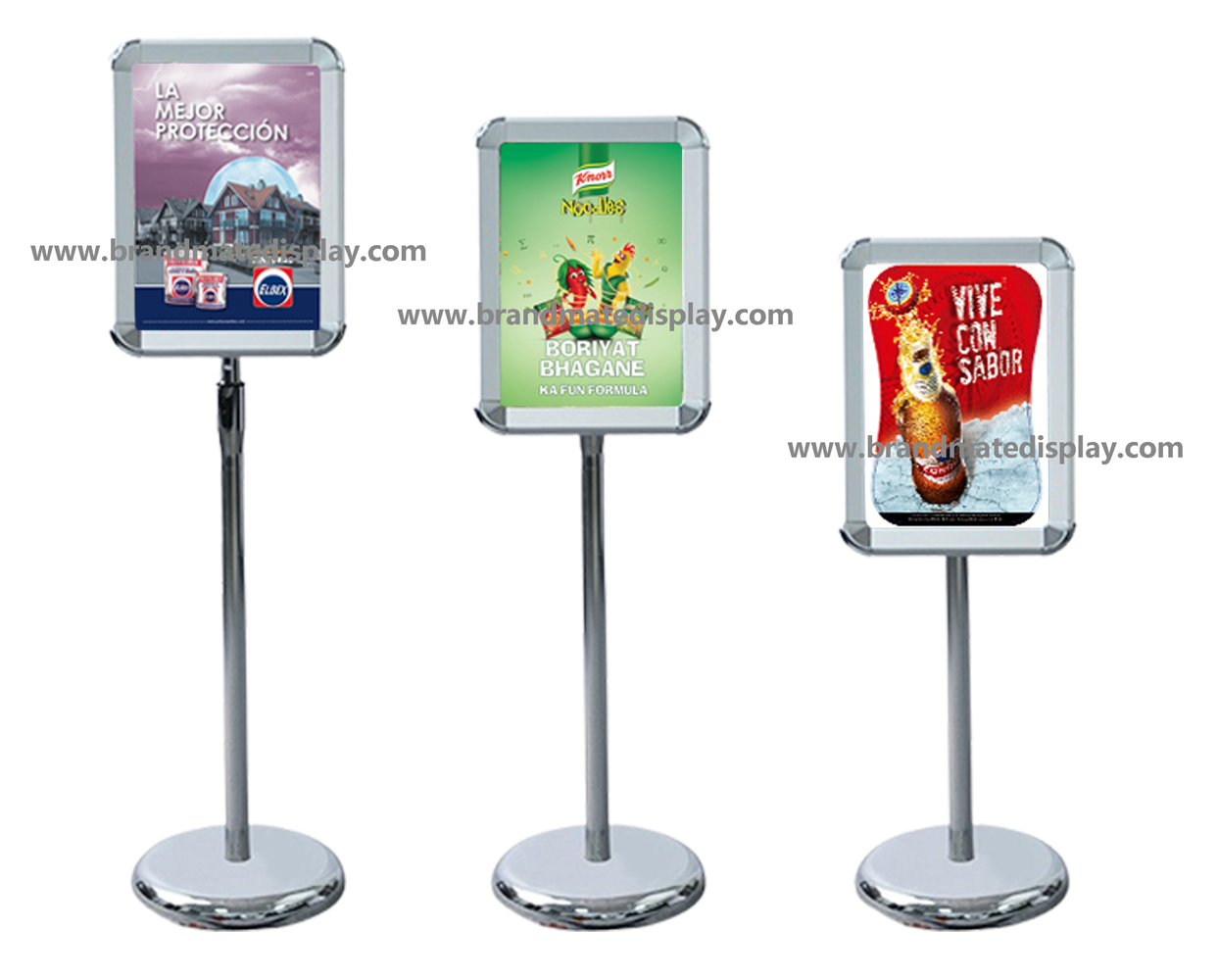
This photograph from the BrandMate Sign Holder family shows three floor-standing framed holders with round bases. It does not show a tabletop option or prove material grade, adjustment range or stability. Request the actual drawing and sample for each format proposed in your quotation.
Start with one message and the action it should help a customer take. A price card beside merchandise, a menu at a service counter and a directional notice before a queue have different reading positions. Mark where the message must first be noticed and where it must be read; these may be different places.
Consider a tabletop proposal when the customer is already close to the relevant product or service point and the counter has enough usable space. Consider a floor-standing proposal when the message needs its own support at an approach position. Neither format is automatically more readable: compare the actual printed message at the proposed height and viewing angle.
Review the users and the location with store staff, including standing and seated viewing positions where relevant. If the same long menu cannot be read from the aisle, agree a shorter approach message and a separate close-reading location rather than simply raising a small card. Record the chosen task for each holder so a mixed-store order does not substitute formats based only on paper size.
| Decision | Tabletop proposal | Floor-standing proposal | Approval evidence |
|---|---|---|---|
| Where the message is read | Beside the relevant product or service point. | At an agreed approach or decision position with its own support. | Same intended message reviewed from recorded customer positions. |
| Space occupied | Holder base, face and loading access share counter workspace. | Base, stem, face and projections share floor circulation space. | Full assembly drawing and an operational placement review. |
| Insert change | Access must fit nearby equipment and the working surface. | Access must suit the assembled height and permitted handling method. | Staff trial with the actual print, thickness, cover and opening method. |
| Viewing angle and glare | Counter height, face angle and task lighting affect the view. | Approach direction, face height and surrounding lights affect the view. | Actual printed sample under the intended lighting, with limits recorded. |
| When to revise the choice | The holder blocks service or the required message is hidden. | The base conflicts with access or the message remains unreadable. | Changed location, artwork or format, followed by the affected recheck. |
Ask for the print cut size, visible opening and complete outside dimensions separately. Borders, lower grips and retention edges can conceal part of the artwork. Show the price, menu or arrow layout on the exact template, including the safe space needed around important information. A nominal A-series label alone does not approve the visible message.
Identify the insert material and finished thickness, including any lamination, backing or cover used in the offer. Try that combination in a representative holder following its instructions. Check that the insert seats fully, remains flat and stays retained when the holder is used normally. A paper demonstration does not settle whether a laminated card fits the same sleeve or grip.
Confirm whether the opening is at the top, side, front or another model-specific location. Include the space and movements needed to remove the previous graphic and fit the replacement. If the card catches or the cover will not close normally, request a corrected insert specification or holder detail rather than forcing it or trimming a production batch informally.
For portrait, landscape or two-sided messages, identify the face and orientation on the drawing and artwork file. A rotation or height-adjustment feature must be confirmed for the selected model, with its permitted position and securing method. Do not infer either feature from a front photograph. Check a revised configuration before approving a campaign that depends on it.
For a tabletop sample, mark the full base and face outline on the available work surface. Include the opening path and normal service movements around payment equipment, trays, merchandise or cleaning access. Review it during the intended workflow with staff. If the message can only be seen after moving essential equipment, change the position or format before release.
For a floor sample, obtain the complete base outline, face projections, stem connections and instructed assembled position. Have the responsible site team review the proposed surface, door swings, queues, trolleys and required access. The visible poster width is not the occupied footprint. Local accessibility and mandatory-sign requirements need the appropriate site review; this format comparison does not approve compliance.
In a controlled area away from public circulation, assemble the exact quoted sample with its intended insert and cover. Check for loose connections, an unsupported face, damaged edges or a base that does not sit as instructed. Record the sample, surface and observed issue, withdraw an unresolved unit and ask for a corrected sample or approved remedy. A normal assembly check does not establish an impact or tip-resistance rating.
Ask for the offered material, finish, assembled mass and care instructions instead of choosing from a metallic or transparent appearance alone. A finish swatch can help agree appearance; it does not prove the base construction or performance. Review carrying points, any detachable parts and the storage route with the operating team before choosing a model that staff must move regularly.
Place the intended full-size print in the actual holder, at the proposed location and face position. Agree the information that must be read, the customer viewing positions and the relevant lighting conditions. Include nearby signs, merchandise and equipment that may hide the message. A clean background rendering is not a substitute for this placement review.
Ask representative reviewers to identify the intended price, instruction or direction from the recorded positions. Note which part is hard to find or read. Try a specific correction such as less text, larger lettering, a changed contrast, another face angle or a different location, then repeat the same viewing task. Keep the criterion tied to the message and user task rather than inventing a universal card height or reading distance.
Evaluate glare with the actual clear face or protective cover included in the offer. Look from the normal approach directions under the relevant ceiling and task lights. Record reflection or shadow that obscures content and review the proposed surface or placement change. A product called anti-glare still needs this application check; a photograph’s exposure can disguise what the viewer sees.
For two-sided information, check both approach directions and ensure that arrows or different messages are assigned to the correct face. Retain the artwork revision, sample ID, location photos and observations. If lighting or layout changes between branches, repeat the affected viewing check rather than extending one store’s result to all sites.
Have the intended operator review the maker’s opening, insert removal and closure sequence on the representative sample. Confirm which parts support the card, how the cover returns to its normal position and where hands need to be kept clear. Record any catching edge, loose component or step that requires an unplanned move of the whole assembly.
Review the proposed change frequency with the exact insert and holder. Keep required spare covers, grips, feet or fasteners identified by model and revision rather than assuming similar-looking parts interchange. If an adjustment loosens during normal instructed use or the replacement insert cannot be fitted correctly, retain the evidence and request a correction before approving the routine.
Obtain approved care instructions for the actual face, substrate, coating and print. Check the cleaners and cloths the store intends to use against those instructions; material names do not establish compatibility with every cleaning or disinfecting product. If compatibility is unresolved, obtain an approved combination and representative sample check instead of inventing a chemical recipe or resistance claim.
Compare the finish and face before and after the agreed care/check sequence under the same viewing conditions. Record scratches, clouding, marks or closure changes and identify the step involved without guessing the cause. Close the trial as approved for the stated materials and conditions, awaiting a specified corrective sample, or not approved. The proposed trial is a buyer requirement, not a report of measured BrandMate durability.
| Stage | Retain | If unresolved | Closure |
|---|---|---|---|
| Format and location | Message/action, reader positions, counter or floor plan and exact proposed model. | Identify hidden content, service conflict or access issue. | Agreed location/format and the responsible site review. |
| Insert fit | Cut size, visible area, thickness, orientation and instructed loading method. | Record a caught edge, hidden message or cover that will not close. | Corrected template/component and repeated fitted sample check. |
| Viewing trial | Actual print/cover, lighting, reading task, positions and dated observations. | Identify the unreadable element or obstructing reflection. | Specific artwork/location change and repeated affected viewing task. |
| Staff and care trial | Changeover sequence, approved care materials and sample condition. | Keep unclear handling or material compatibility open. | Approved instructions/correction and recorded sample result. |
| Store kit release | Holder revision, artwork/template, finish reference, parts, branch label and approver/date. | List substitutions or different branch conditions. | Reviewed configuration and any required branch-specific recheck. |
Keep the holder model/revision, insert template, physical finish reference and care instructions with the graphics program. Label tabletop and floor-standing kits distinctly, including the branch and face/orientation where needed. An agreed frame color does not identify its insert opening, and a carton with the right artwork may still contain the wrong support.
Agree protection for clear faces and finished frames separately from heavy bases and stems. Identify detachable hardware and the correct reassembly instructions. On receipt, record damaged faces, missing parts or a model mismatch against the approved kit list before allocating it to stores. Obtain a documented remedy and recheck the affected function rather than accepting a visually similar substitute.
For repeat orders, compare the current holder, insert material, cover and component references with the retained approval. A different lamination thickness, opening, base or branch layout can change the result. Record which fit, viewing or operating checks need repeating before extending the approval.
Send BrandMate the message purpose, intended reader positions, counter height or floor plan, available footprint, insert dimensions/material/thickness, orientation, change frequency, quantity and destination. Request the actual available tabletop or floor-standing proposal, its drawing and a representative sample plan. Exact specification, customization and commercial terms require project confirmation.
No. Compare the actual message at the intended approach positions and lighting. A tabletop location can suit close reading, while a floor format still needs an appropriate message, face position and clear location.
The paper-size label does not settle finished thickness, grip depth or visible area. Try the intended material in the exact opening and confirm normal closure and retention before approving the template.
Reuse its identified product and artwork record, then review the new branch’s reader positions, lighting, work area and access. Repeat affected checks when those conditions or components differ.
Explore the BrandMate Sign Holder family and tell BrandMate which format or sample decision needs confirmation.
Share the message and intended location in your first inquiry. Detailed drawings, artwork and sample records can follow the project discussion.