Address
Caochang Industrial Area, Liguang Rd, Lishui, Nanhai, Foshan, Guangdong, China
Phone:
0086-20-8938 9313
0086-757-8938 9313
Email:
Work Hours
Monday to Friday: 8AM - 10PM
24x7 online service

Address
Caochang Industrial Area, Liguang Rd, Lishui, Nanhai, Foshan, Guangdong, China
Phone:
0086-20-8938 9313
0086-757-8938 9313
Email:
Work Hours
Monday to Friday: 8AM - 10PM
24x7 online service
Custom LED Light Box & SEG Display Manufacturer
Make an LED light box quotation usable by identifying what arrives with each display. Ask for a supplied-component schedule that records each component, quantity and unit, model or drawing revision, supply status and supporting document. Resolve the open lines before approving that configuration.
For retail procurement teams, display distributors and installation coordinators, this schedule connects the quoted assembly to the sample and the receiving list. It can be a buyer-facing bill of materials without exposing confidential manufacturing details. The aim is a clear answer to a practical question: which identified parts make up the offered kit, and who supplies the remaining items?
Start the schedule with the offered model, finished size, illuminated faces, graphic format and mounting arrangement. Add the assembly-drawing revision and the quotation reference. Define whether one quoted unit means an assembled cabinet, a flat-packed display kit or another stated supply scope. Keep different sizes and constructions on separate identified lines.
Then distinguish quantities per complete display from quantities per carton or per shipment. A shared accessories carton can contain parts for several units; its count does not describe the contents of each kit. Ask which parts arrive installed and which arrive loose. Keep spare components separate from the parts needed to complete the ordered displays.
Use a meaningful counting unit for each line: pieces, pairs, sets, lengths or another explicitly defined unit. If the offer says a mounting set is included, request its contents and quantity rather than assuming that the word set settles the fixing scope. Where a length is relevant, record its unit and the applicable drawing reference.
The following template identifies questions to complete with BrandMate for the offered configuration. It does not state a standard BrandMate construction, component count or package of inclusions. Remove a line only after recording why it is not applicable; leave an unanswered requirement pending.
| Component line | Quantity and unit to confirm | Identity or revision to record | Supply-status question | Evidence that answers the line |
|---|---|---|---|---|
| Frame or cabinet | Complete assemblies or identified loose sections per display; define any set. | Assembly/section drawing, material and finish reference. | Which structural sections, corner connections and closures are included? | Revision-matched assembly list and labelled views of the offered configuration. |
| LED lighting assembly | Assemblies per display; state whether fitted or supplied loose. | Assembly reference and revision; technical identification available for the offered design. | Does the quoted cabinet include the identified lighting assembly? | Component schedule and relevant manufacturer documentation or controlled assembly record. |
| Driver or power supply | Identified units per display; distinguish any shared supply arrangement. | Exact offered model/revision, label information and associated electrical document. | Included, separately quoted or supplied by the buyer? Who reviews the complete electrical arrangement? | Legible label record and technical documents reviewed against that assembly by qualified personnel. |
| Printed graphic | Finished graphics per display and per artwork; distinguish the supplied faces. | Material, finishing/edge reference, production template and approved artwork revision. | Printed graphic included, separately quoted or buyer supplied? | Graphic register, approved template and fitted-sample record for the selected frame. |
| Face, cover or diffuser, where used | Identified panels or layers per display, stating which function each serves. | Actual construction, material and part/drawing reference. | Which elements belong to this design, and which are not applicable? | Section drawing or controlled component description; visible evidence where accessible. |
| Cables, connectors and controls | Each supplied cable/connector/control by count; length and units where relevant. | Part references, connection/cable-exit drawing and compatible control reference if specified. | Which connections are factory completed, and what remains for the qualified local installer? | Identified accessory list and model-specific connection instructions. |
| Mounting or support kit | Brackets, supports and supplied hardware by piece/pair/set with set contents defined. | Kit reference and mounting-interface drawing revision. | Which parts are supplied, and which site-selected fixings or work remain with the installer? | Labelled kit layout and installation responsibility record; site suitability reviewed separately. |
| Agreed spare components | Separate shipment quantity, clearly outside the installed component count. | Compatible replacement reference and applicable display revision. | Included initial spare, separately quoted option or pending decision? | Accepted spare-parts line and compatibility confirmation for the offered assembly. |
| Packing and identification items | Packages and kit allocations; identify any shared accessory carton. | Packing-list revision, package IDs and agreed label fields. | What packing/identification is included for this kit and shipment? | Package-to-component map and accepted packing proposal. |
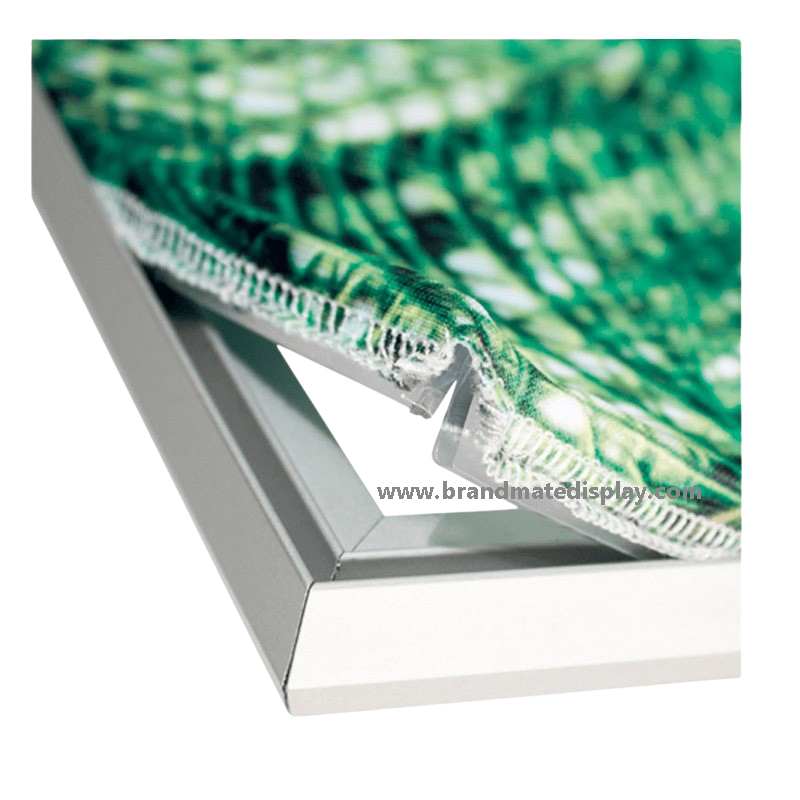
A printed textile face, a rigid poster cover and an optical diffuser describe different functions. Ask which elements the offered design actually uses. A front photograph can help identify the display format, but it cannot establish hidden layers, electrical parts or the full mounting kit.
For electrical lines, request the ratings and compatibility documents that apply to the exact supplied assembly. An identified driver alone does not settle the complete display’s input requirement, installation suitability or certification scope. Refer those questions to the responsible qualified electrical or compliance reviewer for the destination and site.
Give each applicable line one written state and retain the quotation line or reply that supports it. A useful set of states is:
If a document says excluded, clarify whether that means buyer supplied, a separate option or a requirement the proposed configuration cannot satisfy. Keep that meaning visible in the schedule. A revised offer should reconcile the affected lines instead of relying on several informal messages to define one kit.
Ask for a labelled component layout, relevant drawing and sample record that use the same references as the schedule. An external photograph can show accessible fittings and a loose-parts count. For installed or enclosed components, request the appropriate controlled assembly records or evidence prepared by qualified personnel. Record which evidence actually identifies each part and what remains unseen.
Procurement staff should not remove electrical covers, open drivers, disconnect wiring or dismantle an energized display to complete a parts list. Any review that exposes electrical components must be planned and performed by appropriately qualified personnel, following the model instructions and applicable isolation procedure. Obtain label photographs from those personnel when the labels are not safely visible.
Match visible part labels to schedule lines, count loose accessories against their defined units and check the fitted graphic against its template. Record the sample identity, relevant revisions, photograph references and observation date. A correct count does not demonstrate electrical compatibility, fixing capacity or operating performance; those require their own appropriate review.
Where manufacturing detail is confidential, ask for enough controlled identification to approve the supplied scope and obtain replacements. A part reference, relevant technical record and traceable assembly revision can be useful without requiring proprietary production files. If the evidence cannot identify an essential item, retain that line as pending.
Use a discrepancy log when the quotation, component schedule, drawing or sample disagree. Name the exact line, record the observed difference and assign the next action. Close the issue only when the corrected references and the necessary review agree.
| Difference to record | Next action and responsible review | Evidence to retain | Closure decision |
|---|---|---|---|
| Driver listed without a model or quantity | Ask BrandMate to identify the offered units and associated assembly; qualified reviewer checks the relevant electrical compatibility. | Revised schedule, label/technical record and review linked to the exact configuration. | The included supply and applicable technical reference are explicit; unresolved installation questions remain separately open. |
| Graphic count or revision differs | Reconcile faces, artwork allocation and production template with the graphic owner. | Corrected graphic line, approved file register and affected fitted-sample check. | Each required supplied face has an agreed graphic reference, quantity and supply state. |
| Mounting set contents are unclear | Define the kit contents and distinguish supplied fittings from site-selected work with the installer. | Itemized kit list, interface drawing and assigned site responsibilities. | Kit completeness is resolved; the responsible installer separately approves the site arrangement. |
| Sample contains a substituted part | Identify the old/new references and affected requirements; obtain the relevant technical review and recheck. | Proposed change, updated schedule/drawing and affected sample results. | A named decision approves the identified change, or the prior specification is retained. Appearance alone is insufficient. |
| Shared carton leaves a kit incomplete | Reconcile per-display demand, shipment quantities and the carton allocation with packing/receiving owners. | Corrected package map, accessory counts and agreed disposition of missing items. | Every ordered kit has a traceable allocation; missing parts are resolved before the affected installation release. |
For a simple example, the offer may say mounting kit included while the sample’s accessory bag has no reference linking it to that kit. Photographing the bag does not settle the scope. Request its itemized contents and drawing reference, reconcile the count, and have the installer identify any remaining site-selected fixings. This is an illustrative review, not a reported BrandMate order.
Keep one accepted reference list with the quotation, assembly drawing, component schedule, graphic template and relevant sample decision. Give the receiving team the component counts, supplied-loose items and package map. For mixed sizes or store allocations, keep variant and kit labels consistent so similar-looking parts are not combined by appearance.
At receipt, reconcile package IDs and accessible contents with the accepted schedule using the instructed safe unpacking sequence. Record a missing or different part by its reference, quantity and package ID. Preserve relevant packaging and labelled photographs for the agreed resolution process. Keep damaged or suspect electrical equipment out of service pending qualified assessment.
A replacement or repeat order should identify the display and accepted component revision. Ask for any proposed substitution to be described before approval, including affected interfaces and evidence needed for the change. Retaining the same outside dimensions does not establish that a different driver, graphic edge or bracket is interchangeable.
Start with the required display format, size, faces, mounting arrangement, quantity split and intended destination. Add an available drawing or sketch, the required graphic scope and any component that your team plans to supply. Ask BrandMate for the offered configuration and a component schedule with quantities, references, supply states and unresolved questions. Available components, documentation and commercial terms require a project-specific reply.
For a fabric-faced project, begin with the BrandMate LED SEG light box range. Discuss sample evidence through Quality Control and kit allocation through Warehouse & Logistics. Once the supplied scope is clear, the separate LED light box landed-cost guide covers delivery and installed-cost comparison; the custom-signage RFQ guide covers quantity, sample and one-time commercial terms.
Request the supplied-component detail needed to identify and approve the offered kit. Proprietary process details can remain separate. The buyer-facing schedule should still define essential assemblies, quantities, interfaces, supply responsibilities and usable replacement references.
The supply state answers who provides the item; it does not establish which item is provided. Keep the identification question open until a part, assembly or controlled document reference adequately defines the offered component and its applicable revision.
Request the evidence from qualified personnel if a label is not safely accessible. Store staff should not remove electrical covers or disconnect wiring to complete the schedule. Electrical access and inspection must follow the model instructions and appropriate isolation procedure under qualified control.
Discuss the component schedule on WhatsApp or email the proposed configuration to BrandMate.
Tell BrandMate about the display and where it will be used. Share drawings and detailed specifications during the project discussion.