Address
Caochang Industrial Area, Liguang Rd, Lishui, Nanhai, Foshan, Guangdong, China
Phone:
0086-20-8938 9313
0086-757-8938 9313
Email:
Work Hours
Monday to Friday: 8AM - 10PM
24x7 online service

Address
Caochang Industrial Area, Liguang Rd, Lishui, Nanhai, Foshan, Guangdong, China
Phone:
0086-20-8938 9313
0086-757-8938 9313
Email:
Work Hours
Monday to Friday: 8AM - 10PM
24x7 online service
Custom LED Light Box & SEG Display Manufacturer
 Byadminn
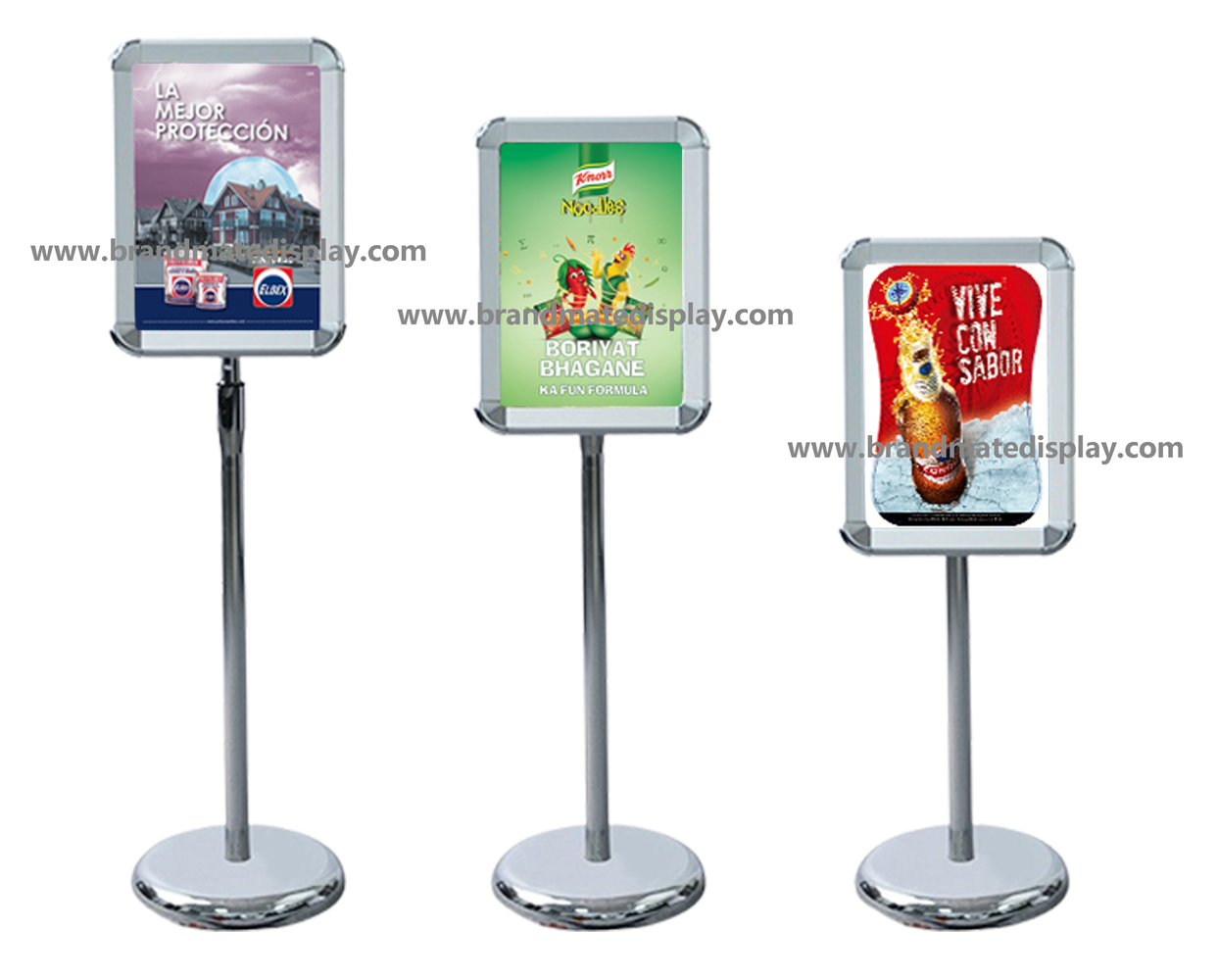
A polished stand is not necessarily an effective directional sign. In hospitals, campuses, conference centers and transport settings, people often read while walking and under distracting light. This guide focuses on viewing distance, finish, sign placement and the boundary between a display product and a code-required accessible sign.
Identify the direction, speed and distance from which the sign first needs to be read. Floor-plan arrows alone do not show where a visitor’s view is blocked by columns, doors or queues.
Reflective face sheets and metallic finishes may distract from small lettering. Evaluate the actual print and protective cover under overhead lights; bright finishes that suit a showroom may be poor for a medical reception.
Dark text on a light ground and the reverse are common high-contrast approaches. The US Access Board requires non-glare finish and contrasting visual characters for signs within its scope; applicability must be decided for the particular site and sign type.
Required permanent room identification can involve tactile characters and braille, whereas many changeable informational displays serve a different role. Do not tell a client that a generic slide-in poster frame automatically meets ADA requirements.
Short notices and directional arrows should be read at the intended approach distance. Detailed legal or access requirements need a separate compliance check rather than arbitrary type-size estimates from the manufacturer.
A tall floor stand with protruding base or sharp edge may intrude into circulation space. Confirm clear paths and any local limits on projections, tip risks and maintenance access with the facility team.
Public-building routes and tenants change. Ask for a safe, predictable graphic change method that does not require moving the whole stand or damaging the surface on each revision.
Pictograms and supplementary translations can help, but they must be tested for clarity with the building’s actual users. Make the message hierarchy clear before print production.
Frequent cleaning can dull protective faces or coatings. Request the approved cleaning method for the selected metal finish, face sheet and print; avoid unproven disinfectant compatibility claims.
A double-sided holder may need different directional content on the reverse. Make the arrow orientation and face label explicit in production artwork and carton packing documents.
Place one sign at the busiest intersection and test it with people unfamiliar with the building. Ask where they looked and which message they missed before committing to the entire fleet.
The manufacturer can supply dimensions and materials; a building designer or qualified local reviewer should decide if a mandatory wayfinding or accessibility requirement is met. This is an important distinction in the purchase order.
List whether the sign is decorative directional information or regulated room/egress identification. Confirm required wording, character size, mounting location and whether tactile/Braille elements are needed for the exact jurisdiction.
Not every application justifies the same hardware or specification. A freestanding advertising holder may not satisfy a jurisdiction’s requirements for permanent room identification. Record this alternative in the selection report and be prepared to reject the more elaborate quotation if it does not solve a real operating problem. A useful vendor will explain trade-offs rather than insisting its most expensive option is always appropriate.
Review a physical sample from a realistic approach distance, under existing building lighting and against the actual wall finish. Check glare, contrast and view blockage by furniture or people.
Before approving a quantity order, ask for: installed viewing mockup, face dimensions, non-glare finish sample and local access/code review. Request a revision or date on each file and confirm that the evidence represents the exact product and configuration in the quotation. If the supplier answers with a photo of a different SKU, keep the item open rather than guessing equivalence.
The building accessibility lead, architect and facilities staff should approve the correct sign class. A seller cannot guarantee compliance merely by showing a legible black-and-white rendering.
Separate removable floor holders from permanent mounted signs and pack delicate printed inserts to prevent curling. A misplaced arrow during installation can defeat an otherwise readable sign.
Illustrative wayfinding test: A handsome chrome stand marks a corridor junction, but its pale grey lettering disappears beneath overhead spotlights. Testing one print at the actual approach distance changes the finish decision before a hundred stands are purchased. This is an illustrative planning exercise, not a reported BrandMate customer case. The purpose is to uncover a design, access or handoff issue while there is still time to change a sample. The final acceptance exercise should be approved by the purchaser and documented with photographs and notes.
Where accessibility requirements apply, use the actual US Access Board or local code criteria for the sign type; keep compliance claims scoped to verified designs and locations.
Are all directional signs required to have Braille? No. Requirements depend on sign purpose and applicable jurisdiction; permanent room identification may differ from directional or informational signs. Have an accessibility reviewer classify the proposed use.
Which visual properties matter for legibility? Viewing distance, character size, contrast, non-glare finish, lighting and obstacles. Use the applicable code for required signs, not a generic decorative sign rule.
To request a manufacturer review, send the current application, proposed quantity and destination, target date, and the model-specific drawings, samples or test evidence described above. Include the unanswered technical questions in the RFQ; we will confirm what is feasible for the proposed configuration rather than presenting unverified performance as a guarantee.
Reference notes: US Access Board: sign visual-accessibility guidance. These sources support general principles only; they do not certify or establish the specifications of BrandMate products.
Review the current manufacturer product range for available configurations, and our quality-control process before preparing an RFQ. Confirm product availability and this category link on the live website before publishing.