Address
Caochang Industrial Area, Liguang Rd, Lishui, Nanhai, Foshan, Guangdong, China
Phone:
0086-20-8938 9313
0086-757-8938 9313
Email:
Work Hours
Monday to Friday: 8AM - 10PM
24x7 online service

Address
Caochang Industrial Area, Liguang Rd, Lishui, Nanhai, Foshan, Guangdong, China
Phone:
0086-20-8938 9313
0086-757-8938 9313
Email:
Work Hours
Monday to Friday: 8AM - 10PM
24x7 online service
Custom LED Light Box & SEG Display Manufacturer
 Byadminn
Two freestanding signs can look almost identical in a catalog and still require different cleaning, weights, finishes and spare parts. The material behind a black coating or metallic surface matters most when the stand is moved, touched or washed repeatedly. Buyers should specify the actual construction and operating conditions, not a guessed metal from a photograph.
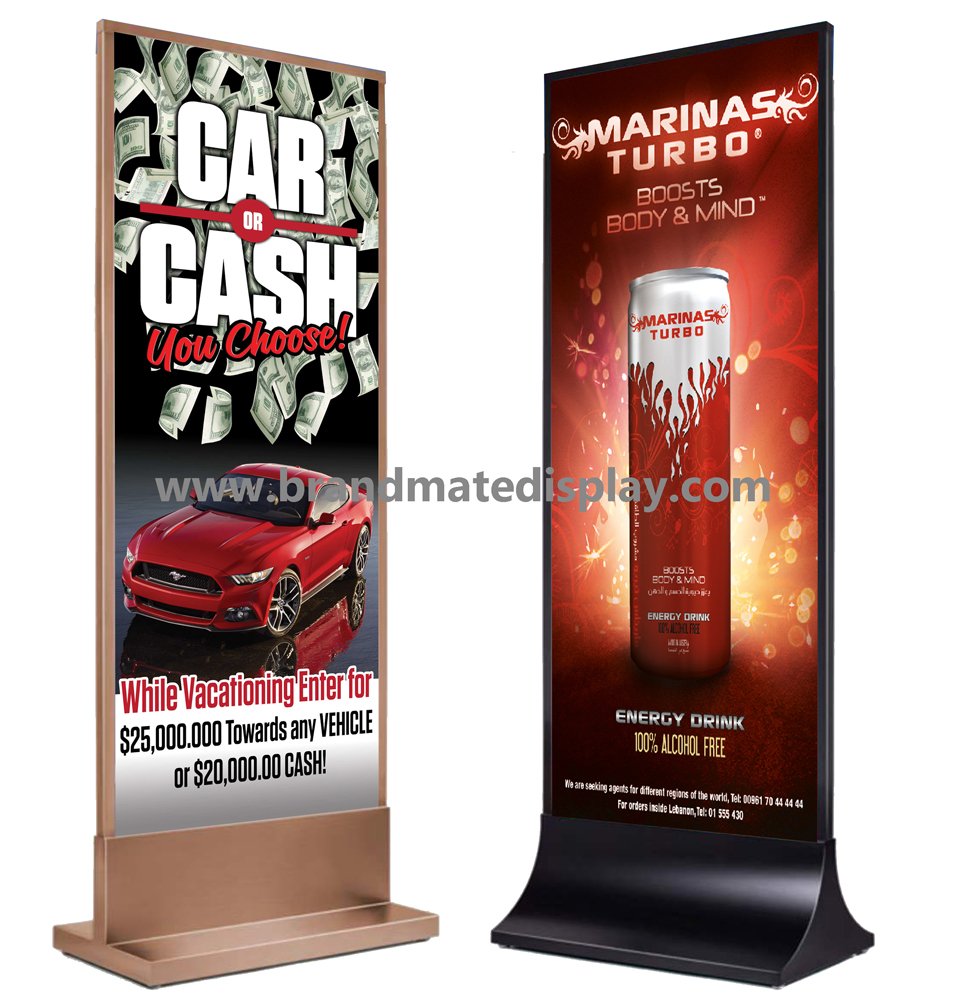
A brushed look does not necessarily mean stainless steel. Ask for the base metal grade or material family, surface treatment and assembly drawing; do not infer composition from color photographs.
Different alloys and finishes have different corrosion performance and appearance. If exposure or specific cleaning matters, request the actual grade and approved finishing procedure instead of using ‘stainless’ as a universal quality guarantee.
Extruded profiles can support clean frame designs, but a light upper frame still needs a compatible stable base. Examine joint design, fastening hardware and real assembled balance before assuming lower material weight is always beneficial.
Specify color reference, gloss or texture intention, surface preparation and acceptable visible defects. A batch can be mechanically sound yet still look inconsistent across a retail chain if the finish approval is vague.
A heavy fixed reception sign and a wheeled promotional stand experience different risks. Ask who will move it, how often and whether hand-contact areas or corner surfaces need extra protection.
Rough or sharp edges can mark a protective sheet or printed poster. Test the actual insert-change procedure and inspect corner joins; the graphic holder is part of the assembly, not an optional decorative detail.
T-base, curved and wheeled platforms occupy different footprints. Identify pedestrian contact risk and site surface; a heavy steel base is not automatically correct for every high-traffic location.
Request a coated metal swatch under realistic lighting and agree a reference standard. Black, white, silver and decorative metallic finishes can vary significantly with texture and illumination.
Shop cleaners differ from mild detergent and water. Obtain documented compatibility guidance from the product supplier for the chosen finish; do not promise unlimited resistance to chemicals.
Ask about fastener finish, welds, screw heads and base covers as well as front-facing surfaces. These are common points where a showroom photo fails to show the quality a distributor receives.
Replacement poster covers, feet, wheels and hardware should be identified by model. A customized appearance is easier to maintain when the supplier also documents how to replace worn components.
A premium mirror-polished surface can demand careful protective separation in transport. Consider carton weight, padding, replaceable faces and freight mode as part of the final material decision.
Request actual alloy or steel grade, panel thickness, finish and base configuration for each quotation. ‘Metal stand’ is not an adequate specification when weight, corrosion exposure and visual finish drive the buyer decision.
Not every application justifies the same hardware or specification. If the stand is used for one short sheltered event, high-cost decorative metal may not improve project value. Record this alternative in the selection report and be prepared to reject the more elaborate quotation if it does not solve a real operating problem. A useful vendor will explain trade-offs rather than insisting its most expensive option is always appropriate.
Compare representative samples for edge burrs, surface scratches, powder-coat consistency and base stability on the proposed floor. Request a finish standard agreed to by both purchaser and manufacturer before bulk QC.
Before approving a quantity order, ask for: material declaration, finish sample, assembled-base dimensions, scratch inspection and cleaning advice. Request a revision or date on each file and confirm that the evidence represents the exact product and configuration in the quotation. If the supplier answers with a photo of a different SKU, keep the item open rather than guessing equivalence.
Ask the installer to check levelness, moving parts, cleaning chemical limits and whether casters need brakes. Outdoor placement or humid cleaning procedures may change the suitable material specification.
Protect powder-coated faces against metal-to-metal abrasion and isolate stainless pieces if surface marks are unacceptable. Label hardware packs by finish and stand model to prevent mixed kits at site.
Illustrative purchasing mistake: A buyer requests ‘stainless finish’ expecting stainless steel, but the supplier quotes painted carbon steel with a metallic appearance. Both can be legitimate products; the material and finish must be identified separately before approval. This is an illustrative planning exercise, not a reported BrandMate customer case. The purpose is to uncover a design, access or handoff issue while there is still time to change a sample. The final acceptance exercise should be approved by the purchaser and documented with photographs and notes.
Use stainless when the real exposure/cleaning requirement supports it, aluminum when mobility or weight matters, and coated steel when price and rigidity suit the actual setting; verify the quoted grade before choosing.
Is stainless always better than powder-coated steel? No. The right material depends on cleaning, exposure, weight, finish, corrosion risk and budget. Require an actual grade and a finish sample.
What counts as an acceptable powder-coat finish? Define inspection lighting, viewing distance, agreed color reference and permissible visible defects on a signed sample. “Premium coating” is not an acceptance criterion.
To request a manufacturer review, send the current application, proposed quantity and destination, target date, and the model-specific drawings, samples or test evidence described above. Include the unanswered technical questions in the RFQ; we will confirm what is feasible for the proposed configuration rather than presenting unverified performance as a guarantee.
Reference notes: ISTA transport simulation procedures. These sources support general principles only; they do not certify or establish the specifications of BrandMate products.
Review the current manufacturer product range for available configurations, and our quality-control process before preparing an RFQ. Confirm product availability and this category link on the live website before publishing.