Address
Caochang Industrial Area, Liguang Rd, Lishui, Nanhai, Foshan, Guangdong, China
Phone:
0086-20-8938 9313
0086-757-8938 9313
Email:
Work Hours
Monday to Friday: 8AM - 10PM
24x7 online service

Address
Caochang Industrial Area, Liguang Rd, Lishui, Nanhai, Foshan, Guangdong, China
Phone:
0086-20-8938 9313
0086-757-8938 9313
Email:
Work Hours
Monday to Friday: 8AM - 10PM
24x7 online service
Custom LED Light Box & SEG Display Manufacturer
 Byadminn
Choosing between a SEG fabric light box and an acrylic light box is not a quality question; both are proven formats. It is a fit question: face size, graphic change frequency, viewing distance and the window reveal decide the winner. This comparison walks through the differences that matter in a retail window.
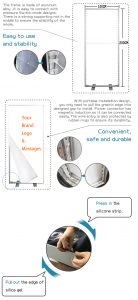
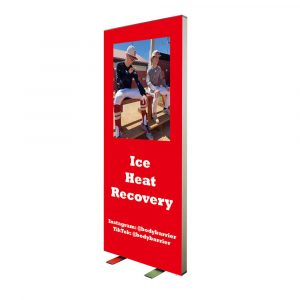
A SEG fabric light box is an aluminium frame with LEDs and a tensioned printed textile. The fabric carries a silicone edge that presses into the frame groove, so the face has no visible fixings and can be replaced without tools.
An acrylic light box uses a thick clear or opal acrylic panel as the face. The graphic prints directly on the panel or sits as an insert behind it. The panel gives a glass-like depth and a premium edge-lit look, especially on smaller units such as crystal poster displays.
They are not two grades of the same product. They are two construction systems with different strengths.
Window displays change with campaigns, face street light, and get judged from the pavement. Each format answers those conditions differently.
In a SEG box, light passes through the textile, which acts as the final diffuser. Evenness depends on LED pitch, frame depth and fabric choice working together. In an acrylic unit, the panel spreads the light and the edge polish frames it. Crispness comes from the panel; the risk is hot spots when the LED layout does not match the panel thickness.
Either way, the same rule applies: agree a brightness target and a measurement method before production. A pretty face with no written target cannot be checked at goods-in.
| Situation | Better fit | Why |
|---|---|---|
| Large window wall over 1.5 m | SEG fabric | No panel joints; lighter structure; even glow |
| Counter or shelf-edge unit | Acrylic crystal | Premium depth; crisp edge; compact sizes |
| Campaign changes every few weeks | SEG fabric | Front-access graphic swap by store staff |
| Fixed premium brand image | Acrylic | Printed panel reads as a glass feature |
| Frequent shipping between sites | SEG fabric | Frame packs flat; fabric rolls |
| Hotel or boutique interior feature | Acrylic | Finish matches premium interiors |
| Consideration | SEG fabric light box | Acrylic light box |
|---|---|---|
| Max practical face size | Very large, seamless | Limited by sheet size and weight |
| Graphic change | Minutes, front access, by staff | Panel reprint or replacement |
| Optical character | Soft, even, fabric texture | Crisp, glassy, defined edges |
| Shipping weight | Light | Heavy panels need protection |
| Damage risk in transit | Low for the face | Panel corners and edges are fragile |
| Cleaning | Textile wipe or vacuum | Non-abrasive acrylic cleaner |
| Best viewing | Mid to long distance | Short to mid distance |
| Structure | Aluminium frame, textile face | Frame plus thick acrylic panel |
A third format enters the same conversation: the snap frame light box. It holds a printed poster behind an edge-lit or back-lit panel with spring clips. It is the cheapest to buy and the simplest to refill, but the open edge and thinner profile read less premium. In a street window, snap frames suit fast-changing notices; SEG and acrylic suit brand features. Mixing all three across one store is common and sensible when each is matched to its job.
| Worth it | Skip it |
|---|---|
| Large seamless window walls | Small units where acrylic depth adds value |
| Campaign graphics that change often | One fixed brand image for years |
| Multi-store rollouts with shipping | Single showcase piece in one location |
| Soft even glow as the brand look | Ultra-crisp glass-like presentation |
Most of these errors share one cause: the format was chosen before the window was measured and the change routine was written down. Ten minutes with a tape measure and a maintenance calendar prevents the expensive ones.
SEG uses a tensioned printed fabric with a silicone edge in an aluminium frame; the graphic swaps from the front. An acrylic light box uses a thick clear or opal panel with the graphic printed on it or inserted behind it, giving a glass-like finish.
For faces beyond about 1.5 metres, SEG fabric is usually the better fit: it spans the opening without panel joints, ships lighter and keeps the glow even across the face.
SEG fabric. Store staff can replace the graphic from the front in minutes. Acrylic requires a reprinted panel, which means a production cycle rather than a changeover.
At small and medium sizes, many buyers prefer the crisp, glassy depth of acrylic. On large faces, the even fabric glow usually reads better. Judge both lit, at your viewing distance, before deciding.
Yes, and it is common. Use acrylic for compact premium features and SEG for large walls and campaign faces, keeping colour temperature and brightness consistent so adjacent displays match.
SEG fabric. Frames pack flat and graphics roll, while thick acrylic panels are heavy and need corner and face protection in transit.
Large, changing, street-facing faces belong to SEG fabric. Compact, fixed, premium features belong to acrylic. Both need a written brightness target and a lit sample before production. The fastest way to a wrong order is choosing a format first and forcing the window to match; measure the reveal, count the changeovers, then pick the system that serves them.
Answer the seven lines and one format usually wins by five or more. If the score is close, order samples of both and judge them lit in the actual window. The glass decides more than the catalogue does.
We will reply within 2 hours.
You can also use the contact page and attach a drawing, a site photo or your artwork file.