Address
Caochang Industrial Area, Liguang Rd, Lishui, Nanhai, Foshan, Guangdong, China
Phone:
0086-20-8938 9313
0086-757-8938 9313
Email:
Work Hours
Monday to Friday: 8AM - 10PM
24x7 online service

Address
Caochang Industrial Area, Liguang Rd, Lishui, Nanhai, Foshan, Guangdong, China
Phone:
0086-20-8938 9313
0086-757-8938 9313
Email:
Work Hours
Monday to Friday: 8AM - 10PM
24x7 online service
Custom LED Light Box & SEG Display Manufacturer
Approve the exact writing-surface, marker and cleaner combination with a recorded sample test before selecting it for a café writing board.
This guide helps cafe operators, retail display buyers and distributors approve the writing material combination for an already selected board. The useful result is a traceable sample decision: which surface, markers and permitted cleaning method were checked, under which conditions, and what must be corrected before order approval.
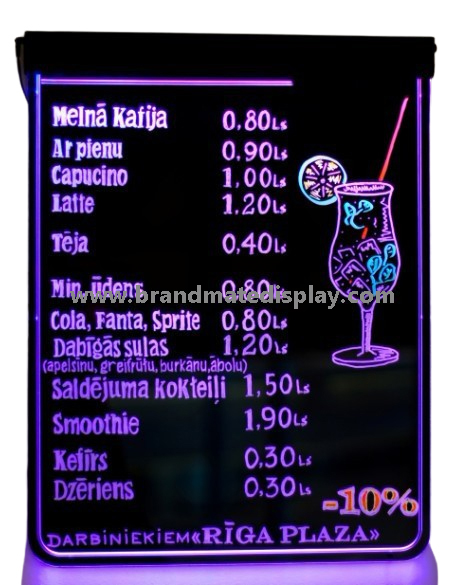
The photograph from the BrandMate LED Writing Board family shows handwritten menu text and an illuminated border. It does not identify the surface material, marker formulation, cleaner or erase performance. Confirm those from the offered model and the actual sample record.
Glass, acrylic and coated writing faces can require different care. Ask which material and coating are offered for the exact board, and identify the proposed marker formulation and cleaner in the sample record. A demonstration on another surface does not approve the same marker for this one.
Fluorescent, liquid-chalk, paint and permanent markers are different systems. Use only the types the maker authorizes for the selected surface. If neither the surface nor the permitted marker is identified, keep the combination open rather than choosing by the color of a showroom photograph.
Identify the writing face separately from a protective cover, frame or light-guiding layer. Ask whether the test piece carries the same exposed finish and coating as the quoted production board, and record which face is intended for writing. If only a loose material coupon is available, keep its material result separate from the access, power and appearance checks of a completed board.
Obtain the surface specification and the maker’s written list or description of permitted markers, cleaners and cloths. Record actual product identifiers and the relevant instruction revision in the private project file. A generic label such as fluorescent or washable is a starting description, not approval of every formulation sold under that category.
Use a representative sample of the production surface and coating. Agree the marker colors, thin and thick strokes, written area, dwell period, number of write/erase repetitions and intended lighting with the buyer and manufacturer. Those are project test inputs; no universal stain-free duration or erase-cycle count is claimed here.
Keep an untouched reference area or comparable unused sample. Record its initial condition under the same light and viewing distance used for the post-test inspection. This separates a pre-existing scratch or reflection from a change during the trial.
Define what the buyer will accept before starting: readable intended strokes at the agreed distance, and no residual menu strokes or new surface change relative to the unused reference after the permitted cleaning sequence. Agree how to judge a doubtful result, who may approve it and whether a second sample is required. Use recorded conditions rather than a universal number of wipes or an arbitrary cleaning pressure.
Give each proposed marker/color and cleaning method its own labeled test area or sample. Keep different trials from overlapping, and note the application, drying and cleaning sequence from the relevant instructions. A result for one color and dwell condition should not silently approve the whole assortment or a different cleaning product.
| Input | Identify for this trial | Keep separate |
|---|---|---|
| Surface | Board/model revision, exposed writing face, material/coating and representative sample ID. | Another sheet grade, finish, side or complete-board configuration. |
| Marker | Permitted formulation/product identifier, color and intended thin/thick menu strokes. | Untested colors, replacement formulations and permanent/paint systems. |
| Time and repetition | Application/drying sequence, agreed dwell periods and write/erase checkpoints. | Short demonstration results versus longer intended dwell or repeated-use claims. |
| Cleaning method | Maker-authorized cleaner, cloth, sequence and complete-board precautions. | Stronger chemicals, added abrasives or a different removal method. |
| Inspection | Untouched reference, baseline condition, viewing distance/light and required result. | Different lighting or camera exposure presented as an equivalent test. |
Write a short menu containing small price figures, larger headings and the intended colors. Confirm that the required strokes are readable at the agreed customer distance before the dwell period begins. Retain a photo of that starting layout and record when the writing was applied.
Leave the test writing for the agreed period reflecting the intended use. An immediate showroom wipe cannot establish removal after a longer dwell. If the buying team changes that intended period, test the revised condition before approving it.
Record the start and end time for each dwell condition. If daily specials and a longer campaign require different periods, identify them as separate test conditions rather than replacing one with the other. Use the approved surface preparation and marker instructions consistently. Note any deviation so the purchasing team can decide whether to repeat the trial.
Keep the menu layout and viewing reference comparable between trials. Small prices, punctuation and larger headings give different information from a thick decorative stroke alone. A photograph with a different camera exposure is supporting context, not a measurement of the board’s lighting output or an automatic pass for readability.
Follow the surface maker’s approved cleaner, cloth and wiping instructions. Record the products and steps used rather than describing the result only as easy cleaning. If an approved damp method applies, keep liquid away from electrical parts and do not spray or immerse the complete powered board.
Inspect for residual strokes, colored shadows, haze, scratches and surface dulling after cleaning. Compare with the untouched reference under the agreed normal and illuminated viewing conditions, where applicable. Stop if the permitted method leaves residue or damages the face; request a different approved combination and repeat the test instead of improvising with solvent or scraping.
Keep the test to the approved surface method and follow the complete board’s power-isolation and moisture precautions. A sheet-care instruction is not permission to wet connectors, spray an assembled enclosure or open electrical components. Request clarification if the surface and board instructions appear inconsistent before proceeding with that combination.
Distinguish remaining pigment from a pre-existing mark by comparing the labeled trial area with its baseline and unused reference. Record where the change appears and which step preceded it; do not diagnose the cause from a single photograph. If further removal would require a different chemical, abrasive or scraping action, keep the result open and obtain an approved revised proposal rather than extending the trial informally.
Repeat the agreed writing and erasing sequence on the sample, retaining the condition record at the agreed checkpoints. Check whether small figures still read clearly and whether marks or scratches accumulate. Do not treat a one-time clean wipe as proof of a measured service life.
Agree the visual acceptance criterion before testing: for example, no visible residual menu strokes or new haze/scratches compared with the reference under the specified inspection conditions. That criterion is a proposed buyer requirement, not a claim that a BrandMate model has already passed it.
Use the same labeled sample areas, method and inspection setup throughout the agreed repetitions. Record each required checkpoint and any change to cloth, marker or cleaner. If a consumable is replaced during the trial, identify the replacement so the result remains reproducible. A changed method requires review of which results still apply.
Report only what the agreed trial establishes. Passing a defined number of sample repetitions under recorded conditions does not establish unlimited erasing, a scratch-proof surface or the useful life of every installed board. If the intended use changes, agree the additional conditions that need checking before extending approval.
Retain the board model/revision, surface material/coating, marker and cleaner identifiers, dwell and repetition conditions, viewing light/distance, dated before-and-after photos, result and authorized approver. Link that record to the sample retained by the purchasing team.
A change to surface, coating, marker formulation or cleaning product requires a renewed compatibility check. Reordering a similar-looking writing board does not prove it uses the approved face material. Keep this sample acceptance separate from the site’s daily staff instructions and electrical maintenance responsibilities.
Close the record with a clear outcome: approved for the identified combination and conditions, awaiting a stated corrective sample, or not approved. State any limits in the release note, including untested colors or longer dwell periods. Attach the dated record to the retained sample and quotation revision so the result follows the actual offered material.
For repeat orders, compare the current face/coating and consumable identifiers with the approved record. A replacement marker, revised cleaner or changed surface is a new compatibility question even if the menu still looks similar. Provide the approved combination and care reference to the operating team, while keeping daily staff handover and electrical maintenance as separate tasks.
| Stage | Record | If not resolved | Required closure |
|---|---|---|---|
| Before writing | Sample/reference IDs, untouched condition, permitted materials and agreed method. | Keep an unidentified surface or unauthorized combination out of the trial. | Confirmed configuration and a documented starting reference. |
| Stroke and dwell review | Menu/color areas, viewing conditions and actual application/dwell times. | Identify unreadable strokes or a deviation from the agreed condition. | Corrected proposal and repeat of the affected trial condition. |
| After permitted cleaning | Residual strokes, haze, scratches or dulling compared with the baseline/reference. | Stop at the authorized method; retain the marked sample and photographs. | Approved revised combination or remedy and a new affected-condition result. |
| Repeated trials | Checkpoint results, consumable changes and observed surface condition. | Do not convert an incomplete sequence into a lifetime or durability claim. | Completed agreed sequence with documented limits and reviewer decision. |
| Order release | Exact combination, drawing/offer revision, limits, retained sample and approver/date. | List untested substitutions or open corrective samples. | Signed project approval for the stated combination and conditions only. |
Send BrandMate the proposed board model or size, intended marker types, writing dwell and change frequency, cleaning preference, use conditions, quantity and destination. Ask for the applicable surface and care specification plus a representative compatibility sample. Agree how the trial will be performed and who will review it; confirmed results and supply terms require actual project evidence.
Use only a marker type authorized for the offered surface and verify the actual combination. A similar color or a result on another board does not approve a different marker formulation or coating.
Retain the marked sample, record the method and condition, and request an approved revised combination or remedy. Do not treat improvised solvents or scraping as part of the original compatibility approval.
It establishes only the recorded trial condition. Include the intended longer dwell and repeated-use conditions in the agreed sample plan before extending approval.
Explore the BrandMate LED Writing Board family and discuss the material combination you need to approve.
Tell BrandMate which surface, marker or cleaning decision needs confirmation. Detailed sample records and photographs can follow your first inquiry.