Address
Caochang Industrial Area, Liguang Rd, Lishui, Nanhai, Foshan, Guangdong, China
Phone:
0086-20-8938 9313
0086-757-8938 9313
Email:
Work Hours
Monday to Friday: 8AM - 10PM
24x7 online service

Address
Caochang Industrial Area, Liguang Rd, Lishui, Nanhai, Foshan, Guangdong, China
Phone:
0086-20-8938 9313
0086-757-8938 9313
Email:
Work Hours
Monday to Friday: 8AM - 10PM
24x7 online service
Custom LED Light Box & SEG Display Manufacturer
Custom pop up display systems for exhibitors and distributors who need a compact backwall that can be transported, assembled and reused across events.
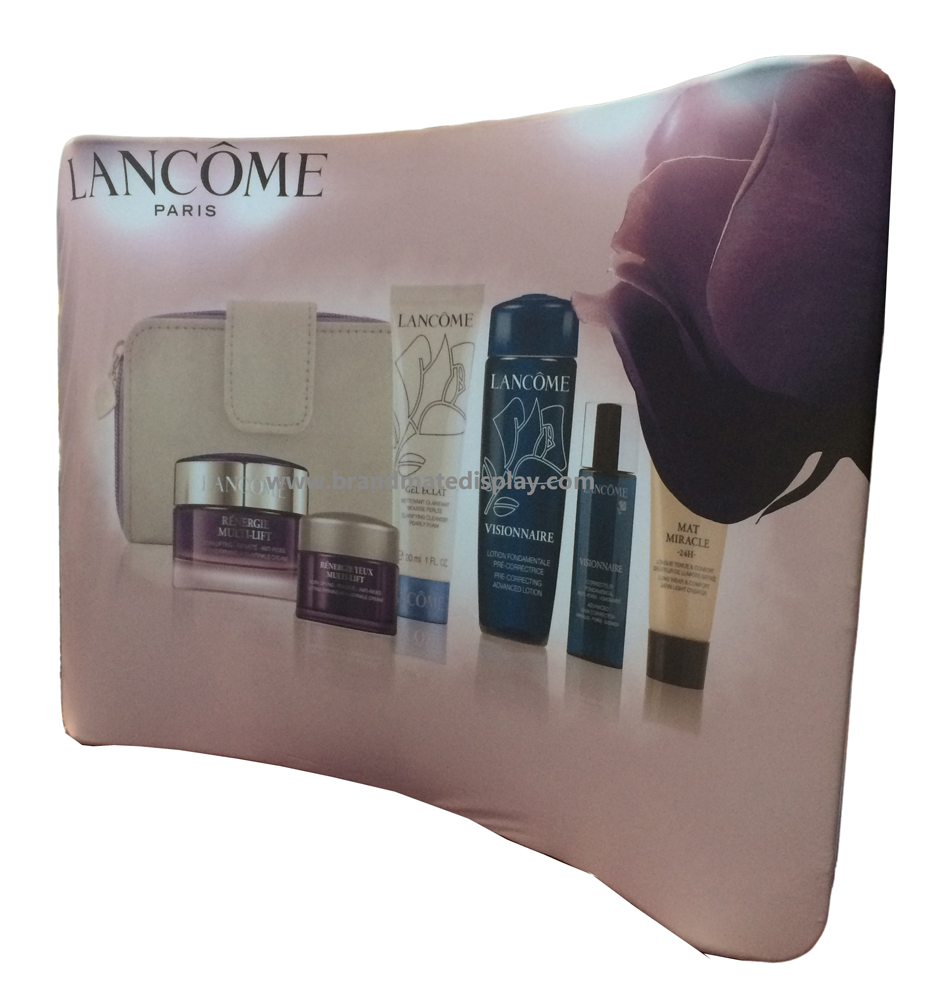
A pop up display is a portable exhibition backwall built around a collapsible or modular frame with a branded graphic surface. The buying decision should balance booth footprint, setup method, graphic replacement, packed size and repeat-use frequency.
| Buyer decision | What to confirm |
|---|---|
| Booth footprint | Finished width, height and available floor depth |
| Graphic system | Tension fabric, panel or other attachment method for the quoted model |
| Setup | Crew size, tools and assembly sequence |
| Repeat use | Replacement graphic process and spare-part requirement |
| Transport | Bag/case type, packed size and gross weight |
The frame should be reviewed as a transportable system rather than only as a display surface. Ask how the sections unfold or connect, how the frame locks, whether feet/base parts are separate and how the graphic is tensioned.
For repeat campaigns, buyers should keep the approved artwork template and finished graphic specification. Replacement graphics should be ordered against the same frame revision so fit and tension remain predictable.
Ask for the actual assembly sequence and what is included in the kit. “Easy setup” is useful only when the buyer knows which parts connect, whether tools are needed and how many people are assumed.
For event work, the bag or case is part of the product lifecycle. Confirm packed dimensions, gross weight, graphic protection and whether the same case is suitable for repeated courier or freight handling.
Do not order collapsible pop-up backwall from a front elevation alone. Provide collapsed frame depth and booth frontage, traffic clearance, maximum height and the parts that project beyond the printed graphic. Compare these dimensions with the actual booth plan.
The complete structure includes the frame, support, connectors and graphics. For a pop up display project, define the frame locks and feet, accessory quantities and whether components are interchangeable across units. Keep a version-controlled component list.
Confirm who views the installation from each direction. A single-sided layout may use a different graphic attachment or back finish from a double-sided layout. If both sides carry artwork, issue a face-labelled print schedule.
Agree the tension graphic with replacement template, finished visible area, seam and safe margins before printing. Store the approved artwork revision with its exact hardware model so the next campaign does not receive a mismatched replacement print.
Ask for a model-specific illustrated instruction starting with inventory, followed by frame locks and feet, graphic installation and a final stability/appearance check. Setup time should only be quoted when the crew size and tools are stated.
Review whether a tool-free setup is available for the quoted model. “Tool-free” may apply to frame assembly but not necessarily to all hardware, lighting or venue work. Confirm local venue rules, rigging/electrical restrictions and safe access before sending staff to the event.
Identify frame connectors and locking clips. Keep a spare-part list, quantities and packaging labels, especially for recurring events. A replacement graphic or connector should reference the actual frame revision rather than a generic product name.
Inspect frame dimensions, joins and frame locks and feet, graphic fit, surface condition, all accessories, packed count and the available installation instructions. If electrical accessories are specified, perform power-on checks separately from mechanical assembly.
Choose protective bag/case and section length. Request packed length, width, height, gross weight, case count and freight handling constraints. Never infer shipping cost from the installed size or assume a carrying bag is suitable for repeated courier handling.
For roadshows and repeat dealer exhibitions, label every unit and printed graphic, preserve the folding/assembly instructions, dry and clean components according to their materials, and inspect connectors after each teardown. Maintain a replacement/repair record rather than repeatedly buying an entire kit.
| RFQ Field | Specify |
|---|---|
| Display format | Pop Up Display and project drawing |
| Size and configuration | collapsed frame depth and booth frontage |
| Graphics | tension graphic with replacement template |
| Assembly | frame locks and feet |
| Accessories / spares | frame connectors and locking clips |
| Event | whether a tool-free setup is available for the quoted model |
| Logistics | bag/case and section length |
| Commercial | Quantity, destination, artwork, deadline and repeat-use requirement |
BrandMateDisplay approaches pop up displays as repeat-use event assets: frame, graphic, case, setup information and replacement parts are reviewed together rather than sold as unrelated items.
Yes, where the selected system is designed for replaceable graphics. Confirm the template and attachment method before reprinting.
Custom dimensions can be reviewed, but the allowable size depends on the frame system and transport requirement.
Booth size, display width/height, quantity, single/double-sided need, destination, artwork status and event deadline.
Related: Tradeshow Display Manufacturer · Quality Control · Warehouse & Logistics
Compare the formats that buyers usually shortlist for the same project.
Send the display type, visible size, quantity and destination. We will reply within 2 hours. If your project is confidential, tell us at first contact and we will keep it under NDA.