Address
Caochang Industrial Area, Liguang Rd, Lishui, Nanhai, Foshan, Guangdong, China
Phone:
0086-20-8938 9313
0086-757-8938 9313
Email:
Work Hours
Monday to Friday: 8AM - 10PM
24x7 online service

Address
Caochang Industrial Area, Liguang Rd, Lishui, Nanhai, Foshan, Guangdong, China
Phone:
0086-20-8938 9313
0086-757-8938 9313
Email:
Work Hours
Monday to Friday: 8AM - 10PM
24x7 online service
Custom LED Light Box & SEG Display Manufacturer
 Byadminn
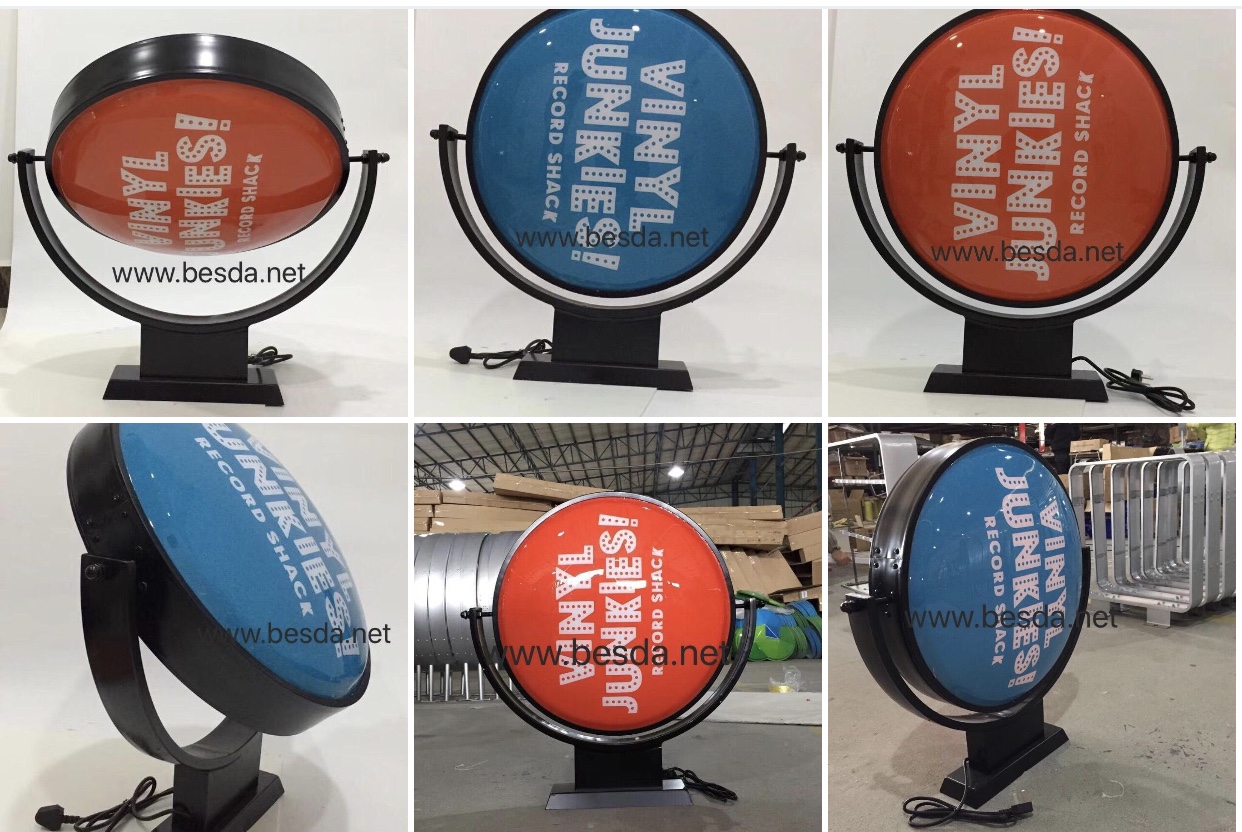
A rotating sign that stops during a store power outage raises a question most quotation sheets omit: what will happen when the supply returns? Motion controls, lighting and mechanical clearance can behave differently after a reset. This guide is a procurement test plan, not a claim that every BrandMate model has automatic restart, speed control or emergency-stop functions.
Ask the supplier to show the actual configuration after a complete loss of supply. The important choices are stopped position, lighting condition and whether motion resumes automatically, requires user action or is unavailable. None of those behaviors can be assumed from the presence of a motor.
Request an assembly drawing that distinguishes incoming supply, LED driver, motor supply and control electronics. If there are separate feeds or external controllers, note which lose power together. Installation professionals, not sales copy, must confirm safe electrical isolation.
A sign above a hotel reception desk and one on an exhibition floor do not share the same supervision, pedestrian clearance or operating hours. Provide the operating location, intended duty cycle, access limitations and site rules so the supplier can assess the proposed mode.
If a printed face can stop between intended viewing positions, the brand graphic may become unreadable. Photograph the actual sample at a power interruption from several starting positions; do not infer a ‘home position’ feature unless the offered controller demonstrates it.
Observe what happens when a qualified technician restores power after an agreed off interval. Record whether illumination turns on, the motor runs, manual control is needed and a previous setting is retained. Repeat the observation; one successful restart is not a performance guarantee.
Confirm where a technician can reach the controller and isolation switch. The installation should avoid requiring store staff to remove illuminated panels or reach into moving mechanisms. Ask the local installer to review the approved mounting drawing before construction.
A ceiling-suspended unit can present different service and safety needs from a floor-mounted one. Check the actual mounting assembly, motion envelope, access equipment and secondary retention requirements where applicable. Do not treat a product photo as a rigging approval.
Measure the final assembled swept envelope, including graphics, decorative trim and adjacent fixtures. After a sudden stop, make sure people cannot snag or push a protruding face while the equipment is secured. The buyer must approve site-specific spacing.
Some motors and controllers may run at a fixed operating mode. Others may have selectable settings. Ask for a dated control demonstration from the exact model revision; ‘adjustable speed’ should not appear in a product specification without proof.
After installation and before public operation, have a competent technician inspect bracket security, wire routing, abnormal movement, visible interference and light operation. Record the initial accepted operation so later faults can be distinguished from installation changes.
A momentary dip and a complete shutdown are not always equivalent. If your project depends on predictable behavior, agree a safe, supplier-approved demonstration with qualified personnel. Avoid improvising electrical tests on live public installations.
Put the interruption and restart sequence in the pre-production sample checklist, with the actual graphic faces fitted and the intended controller connected. Log the sample serial/reference, observer, supply conditions, photographs and video, then sign off the agreed acceptable behavior.
Use a simple four-column log: test step, observed result, acceptable result and action owner. Include isolated power, restored power, motion command if fitted, illumination and stopped graphic presentation. An unresolved safety or installation question should block approval until answered.
Ask suppliers to complete: ‘After loss of power the offered model does X; after power returns it does Y; operator action Z is required.’ Request the model and controller revisions that statement refers to. Do not accept a generic feature list borrowed from a different rotating sign.
Reference the sample photos, drawing revision, controller identification and acceptance log in the final quotation. If a motor, graphic mass or mounting bracket changes after approval, request a documented review of the motion and restart behavior before production continues.
Collect the exact controller, cable harness, motor and power-component part numbers that can be replaced in the offered configuration. Check whether repair requires opening the entire light box and whether a qualified service technician can access the parts after installation.
The facilities team needs safe shutdown and fault-report instructions, while the local contractor needs wiring and mounting drawings. The brand manager needs the approved stopped-face presentation. One technical PDF cannot substitute for these distinct responsibilities.
Ask for a packed unit photo showing how unintended movement is restrained and how controls are protected from impact. Label each controller and bracket against its assembly revision. Recheck alignment after transit rather than assuming the factory test survives all handling.
One vendor may include the controller and commissioning record while another quotes only a powered rotating cabinet. Separate the cost of controls, installation assistance, sample testing, spare parts and required local compliance. The cheaper line item may not supply the accepted outcome.
Illustrative scenario, not a BrandMate customer case: a shop restores power before staff are ready, and a moving sign begins operating near a display fixture. The risk illustrates why startup behavior, clearance and installation instructions must be agreed before a store opening.
Will rotating signage automatically restart after a power cut? The answer is controller- and model-specific. Ask for a documented demonstration of the actual sign with its approved motor, graphics and installation mode.
Can a certified adapter guarantee finished-sign compliance? No. A certified component does not automatically establish that a complete assembled electric sign meets the rules for its destination.
To request a manufacturer review, send the current application, proposed quantity and destination, target date, and the model-specific drawings, samples or test evidence described above. Include the unanswered technical questions in the RFQ; we will confirm what is feasible for the proposed configuration rather than presenting unverified performance as a guarantee.
Related product: LED Rotating Signage Manufacturer. See our Quality Control and Warehouse & Logistics pages for the factory process.
General electrical sign guidance: UL Solutions, Electric Signs and Components. A cited standard does not certify a specific BrandMate product.